


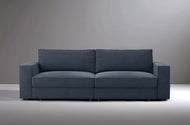


 Aura Full-Sized Sleeper Sofa
 Aura Convertible Twin Chair Sleeper
 Optic Queen Sleeper Sofa
 Optic Multifunctional Ottoman with Storage
 Gateway Queen Sleeper Sofa
 Tera Queen Sleeper Sofa
 Galaxy Full-Sized Sleeper Loveseat
 Galaxy Queen Sleeper Sofa
 Switch Queen Sleeper Sofa
 Switch Queen Sleeper Sectional with Storage Chaise
 Nova Full-Sized Sleeper Sofa
 Nova Full-Size Sleeper Sectional with Storage Chaise
 Toggle Full-Sized Convertible Couch with 16-Position Configurations
Small Space Living: 5 Smart Tips to Make the Most of Every Inch
19 May 2026
Kashif Ahamed | Time to read: 5 min
Share Article:
Small Space Living: 5 Smart Tips to Make Every Inch Work Harder (and Look Good Doing It)
Small spaces get unfairly judged. People assume they’re cramped, cluttered, or limiting. But more people than ever are choosing apartments, condos, studios, and cozy homes. Space isn't the problem, but how you use it.
The best small spaces feel intentional. Every piece has a purpose, and sometimes two or three. With the right furniture, layout, and storage, a compact room can feel open, organized, and easy to live in.
Whether you’re working with 400 square feet or just trying to make your living room feel less chaotic, these five ideas can help every inch work harder.
1. Your Sofa Needs to Earn Its Keep
In a small space, your sofa can't just look pretty. It's got to be your MVP—the piece that handles movie marathons, unexpected guests, and those Sundays when you basically live on it. A sleeper sectional or sofa with built-in storage can give you seating, sleeping, and a place to tuck away the things you actually use —without adding more furniture to the room.
Pro tip: measure your space with the sleeper fully extended. A sofa can fit beautifully during the day and still block a hallway, closet, or bathroom door once it opens.


2. Find Storage In Unexpected Places
Small spaces don’t always need more furniture. Sometimes, the best storage is already hiding in plain sight.
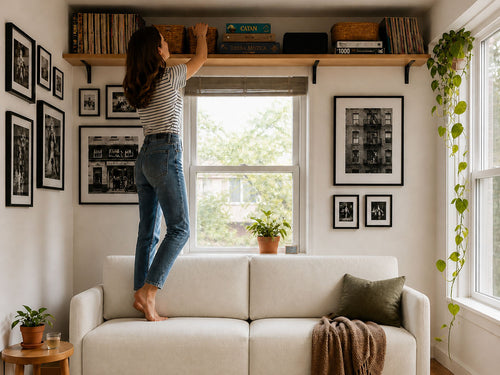
The space above a doorway, around a window, or over a desk can hold more than you think. A slim shelf, a few hooks, or a narrow storage solution can help keep everyday items off counters, tables, and floors without making the room feel crowded.
This is especially helpful in apartments or older homes where storage is limited. A shelf above a window can hold books or baskets with things you want close at hand but not in sight. Cookbooks tuck away on a shelf above the entrance to the space. Even a sliver of space beside the bathroom mirror can hold little things you reach for every day.
The goal is not to cover every wall. It’s to notice the small pockets of unused space and give them a purpose. And the best part? None of it needs to look like storage.
It just looks like your space—thoughtfully put together, with everything exactly where it should be.


3. Turn Corners Into Useful Moments
Corners are easy to ignore. They can feel too small for real furniture, too awkward for art, and too out of the way to matter. But in a small space, even a quiet corner can do something useful.
Floating corner shelves can hold books, photos, record albums, plants, or storage baskets. A ladder shelf can add vertical storage without feeling heavy. A small chair, wall hook, and plug-in pendant can turn an unused corner into a reading spotwithout needing a floor lamp or side table.
Corners are also a natural place to add personality without adding clutter. A few small pieces of collected art, a plant, or a simple stool can make an empty spot feel considered.


4. Create Zones Without Adding Walls
When one room has to do several jobs, clear zones can make the whole space feel calmer.
You don’t need walls to create separation. A rug can define the seating area. A console table behind the sofa can become a small workspace, drop zone, or guest landing spot. Open shelving can separate a living area from a dining nook without blocking light or making the room feel chopped up.
This is especially helpful when your living room also has to act as an office, guest room, dining area, or place to host friends. Instead of letting everything blur together, give each activity a place to land.
Even small visual cues can make a difference. A lamp near a chair says “reading spot.”
A tray by the door says “keys go here.” A table behind the sofa says “this can be a desk when you need it.” The more clearly a room is organized, the less chaotic it feels.


5. Make Storage Easy Enough to Actually Use
Storage only works if it’s easy to use. If it’s annoying to use, it turns into clutter. Just better dressed.
Easy storage is the kind you barely have to think about. A lift-top compartment you can open with one hand. A basket you can grab without digging. A tray or hook by the door for the things you set down every time you walk in. The closer storage is to the way you actually live, the more likely you are to use it.
The real test: Can you put something away as easily as you took it out? If the answer is no, you'll end up with piles of "I'll deal with this later" stuff.
A sectional with built-in storage or an ottoman that opens up keeps your everyday chaos contained but accessible. Throw blankets stay folded but ready. Remotes have a home but don't disappear. Your current book/hobby/project can be tucked away when friends come over.
The goal isn't perfection—it's function. You want a space that can go from "lived in" to "company-ready" in about 5 minutes, not 50.


The Real Secret to Small Space Success
You don't need more space. You need a space that works harder, thinks smarter, and feels completely like you.
The best small spaces aren't trying to be bigger—they're trying to be better. Start with one room, one corner, or even just one really smart furniture choice. Small changes in small spaces make big differences. And once you see how good it feels when everything has a purpose? You'll wonder why anyone needs all that extra space anyway.
Share Article:


