




 Aura Convertible Twin Sleeper Chair
 Optic Queen Sleeper Sofa
 Optic Multifunctional Ottoman with Storage
 Gateway Queen Sleeper Sofa
 Tera Queen Sleeper Sofa
 Galaxy Full-Sized Sleeper Loveseat
 Galaxy Queen Sleeper Sofa
 Switch Queen Sleeper Sofa
 Switch Queen Sleeper Sectional with Storage Chaise
 Nova Full-Sized Sleeper Sofa
 Nova Full-Size Sleeper Sectional with Storage Chaise
 Toggle Full-Sized Convertible Couch with 16-Position Configurations
Buying Less, Choosing Better: Sustainable Furniture Guide
12 Apr 2026
Time to read: 5 min
Share Article:
Introduction
Sustainability in furniture isn’t just about what something is made of—it’s about how long you actually keep it.
For most households, the biggest environmental impact doesn’t come from a single purchase. It comes from replacing furniture too often.
That’s why more shoppers are shifting their mindset:
buy less, choose better, and keep it longer.
If you’re furnishing a living room, apartment, or guest space, choosing the right sleeper sofa can replace multiple pieces—and eliminate the need to buy more later.
Quick Answer: What Does “Buying Less, Choosing Better” Mean?
Buying less and choosing better means investing in fewer, higher-quality pieces that serve multiple purposes and hold up over time.
Instead of filling your home with single-use furniture, the focus shifts to:
- Multifunctional design
- Long-term durability
- Timeless, flexible style
The result: fewer replacements, less waste, and a home that works smarter.
The Real Problem: Furniture Gets Replaced Too Often
Furniture usually isn’t replaced because it breaks—it’s replaced because it stops working for your life.
That might look like:
- Moving into a new space
- Needing room for guests
- Running out of storage
- Buying something trendy that doesn’t age well
The pattern is the same: buy → outgrow → replace.
That cycle is what drives waste—not just materials.
Organizations like the Ellen MacArthur Foundation have highlighted how shorter product lifecycles are a major contributor to global waste across industries—including home goods.
The smarter approach isn’t just “eco-friendly.”
It’s choosing furniture you won’t need to replace.
The Shift Toward Multifunctional Furniture
This is where buying less becomes practical—not just aspirational.
Instead of buying:
- A sofa and a guest bed
- A coffee table and storage
- A sectional and extra seating
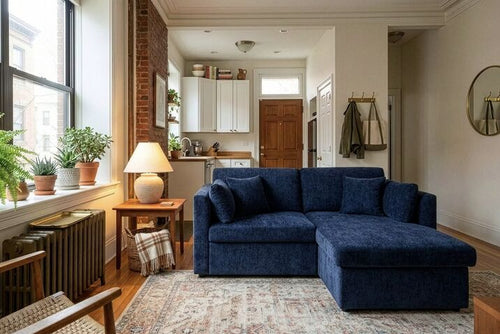
More people are choosing pieces that combine those functions into one—like a modular sectional or convertible sleeper sofa.
This shift is especially common in:
- Apartments and smaller homes
- Guest rooms that double as living spaces
- Homes that prioritize flexibility over fixed layouts
If you want to see how real homes are solving for this, browsing layouts on Pinterest can be a great starting point.



| Feature | Single-Use Furniture | Multifunctional Furniture |
|---|---|---|
| Primary Purpose | One function (e.g., sofa only) | Multiple functions (e.g., sofa + bed) |
| Number of Pieces Needed | More items required | Fewer pieces needed |
| Space Efficiency | Takes up more space overall | Maximizes square footage |
| Flexibility | Fixed use and layout | Adapts to different needs |
| Long-Term Value | Often replaced sooner | Designed for longer use |
| Environmental Impact | Higher due to repeat purchases | Lower due to reduced consumption |
| Best For | Larger, single-purpose rooms | Small spaces and multifunctional homes |
Why This Matters
Choosing multifunctional furniture isn’t just about saving space—it’s about reducing how much you need to buy over time.
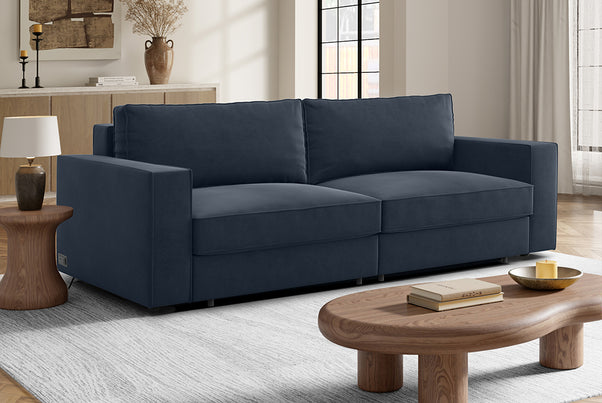
A single well-designed piece, like a sleeper sofa or modular sectional, can replace multiple items—making your home more efficient and more sustainable at the same time.
Why Multifunctional Furniture Is More Sustainable
1. It Replaces Multiple Pieces
A sleeper sofa replaces both a sofa and a bed.
A storage ottoman replaces additional furniture.
Fewer purchases = less waste over time.
2. It Adapts Instead of Being Replaced
Furniture that evolves with your needs stays in your home longer.
- A modular sectional can be reconfigured
- A sleeper sofa stays useful as your life changes
- Built-in storage reduces the need to add more pieces later
3. It Works Better in Smaller Spaces
Smaller homes force smarter decisions—and better furniture.
Multifunctional pieces:
- Take up less space
- Reduce clutter
- Eliminate redundancy
What to Look for When Choosing Better Furniture
1. Quality That Holds Up Over Time
Look for:
- Reinforced wood or steel frames
- High-density foam
- Durable, performance fabrics
2. Functionality You’ll Actually Use
If it’s complicated, you won’t use it.
Prioritize:
- Easy conversion
- Intuitive design
- Comfort for both sitting and sleeping
If you’re comparing options, understanding the difference between convertible sofas and sleeper sofas is key.
3. Design That Doesn’t Expire
Trendy furniture gets replaced faster.
Instead, choose:
- Neutral colors
- Clean silhouettes
- Pieces that move with you from home to home
Small Spaces, Bigger Impact
The “buy less, choose better” mindset matters even more in smaller homes.
Because every piece has to earn its place.
A well-designed convertible sleeper sofa or modular sectional can:
- Replace multiple pieces
- Open up your layout
- Make your home more functional without adding more furniture


Why Coddle Focuses on Multifunctional Design
At Coddle, the goal isn’t to sell more furniture—it’s to design furniture that replaces the need for more.
That means building pieces that combine:
- Seating + sleeping
- Comfort + durability
- Storage + efficiency
Explore options like the Switch modular sectional or Nova sleeper sofa to see how this works in practice.
These pieces are designed to:
- Be used every day—not just occasionally
- Adapt as your needs change
- Reduce the need to replace or add more furniture
That’s what “buying better” actually looks like in real life.
Which Furniture Is Actually More Sustainable?
The most sustainable furniture isn’t the one with the best label.
It’s the furniture you:
- Use daily
- Keep for years
- Never feel the need to replace
Durability and functionality will always outperform short-term trends.
Key Takeaways
- Sustainability is about longevity, not just materials
- Multifunctional furniture reduces total consumption
- Fewer replacements = lower long-term impact
- Better design leads to longer ownership
- Buying less—and choosing better—creates a smarter home
Frequently Asked Questions
What does “buy less, choose better” mean in furniture?
It means investing in fewer, higher-quality pieces that serve multiple purposes and last longer.
Is multifunctional furniture more sustainable?
Yes. It reduces the need for multiple items, lowering overall consumption and waste.
What type of furniture lasts the longest?
Furniture with strong frames, high-density foam, and durable fabrics—especially when designed for everyday use.
Are sleeper sofas sustainable?
They can be. A well-designed sleeper sofa replaces both a bed and a sofa, reducing the need for additional furniture.
Share Article: